Where to find clear turquoise water and swimming holes in Ontario that look tropical
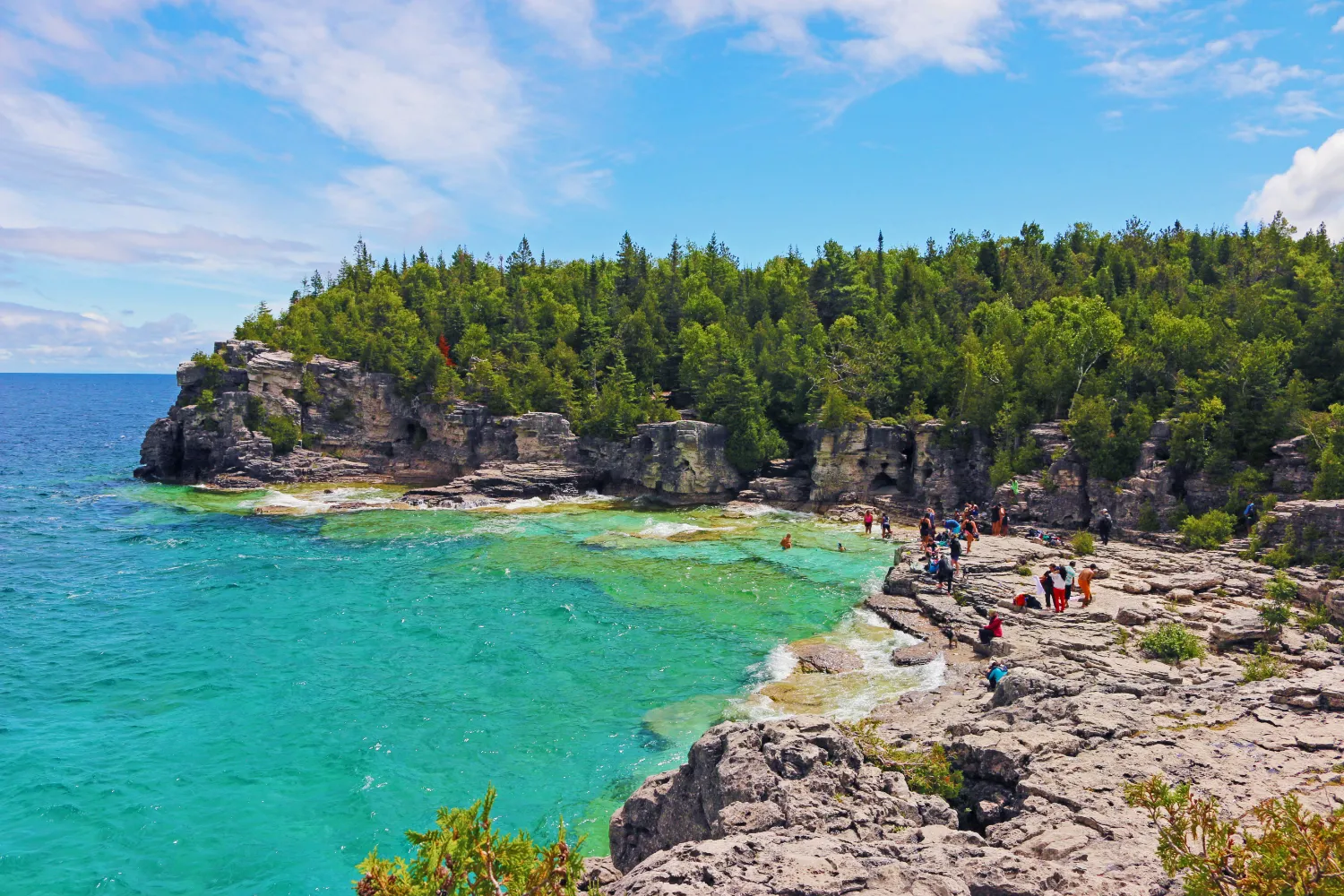
People send the photograph and get accused of faking it.
Turquoise water, white cliffs, no palm trees anywhere. It looks like somewhere with an airport code and a resort tax. It is four and a half hours from Union Station.
Here is where Ontario keeps its impossible-looking water, and what is actually true about swimming in it.
Does Ontario really have turquoise water?
Yes. The clearest, most tropical-looking water in the province runs along the Georgian Bay side of the Bruce Peninsula, and the colour in the photographs is real — no filter required.
Georgian Bay is part of Lake Huron, and the stretch running up to Tobermory sits on white dolostone bedrock. Pale rock, very little suspended sediment, and remarkably few nutrients in the water.
That combination is what produces the colour. Sunlight goes down, hits pale stone, comes back up blue-green. Same physics as the Caribbean, running on a much colder budget.
The comparison is not marketing. It is geology.
Where is the most tropical-looking water in Ontario?
Indian Head Cove and the Grotto, both inside Bruce Peninsula National Park near Tobermory. They sit side by side at the end of a 3.4 kilometre trail, and they are the reason the photographs exist.
Indian Head Cove is a rocky inlet — sun-warmed limestone slabs, cliff walls on both sides, water clear enough to count stones four metres down.
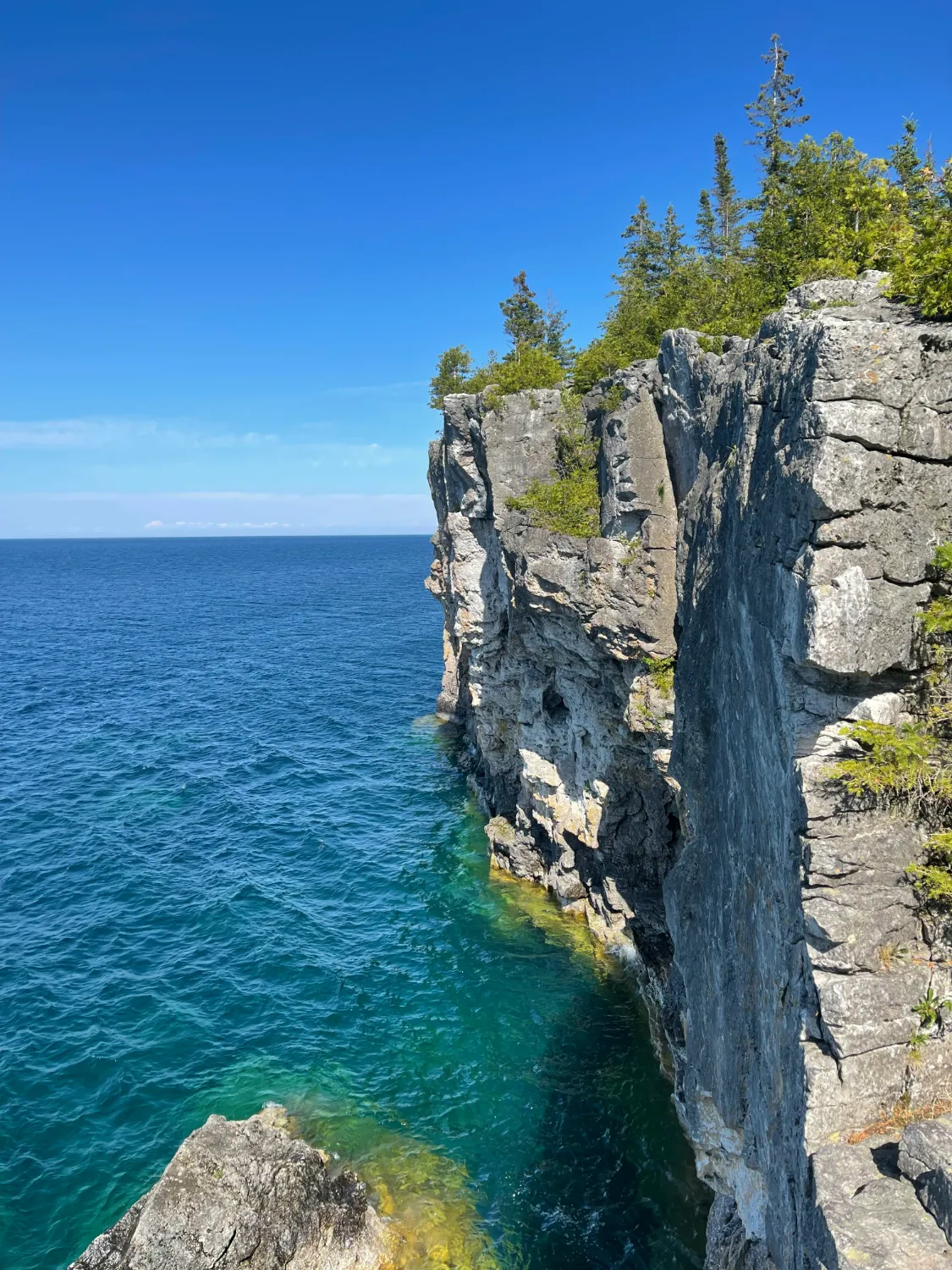
The Grotto is next door: a sea cave the bay has been carving for about ten thousand years, with a cold blue pool inside it. On a bright afternoon, light comes through an underwater opening and the whole cave goes an unreasonable shade of blue.
Most people plan twenty minutes here and stay three hours. Budget accordingly.
Can you swim at the Grotto?
Yes, and plenty of people do — but it is not a beach. No sand, no lifeguard, no gradual entry. You get in off rock, and the water is cold enough to take your breath for the first ten seconds.
There are two ways into the cave: swim through the gap from the cove, or climb down over the rocks at the entrance. The swim is short. The climb is uneven and slippery when wet.
Neither is technical. Both reward not being in a hurry.
If you would rather not get in, you have lost nothing. Half the group usually sits on the warm rock and watches, which is a completely respectable way to spend an afternoon.
How far is Bruce Peninsula from Toronto?
Roughly four and a half hours of driving each way — around 300 kilometres to Tobermory. It is a long day and a genuinely disproportionate payoff.
That distance is the whole reason it stays as good as it does. Nobody stumbles into Bruce Peninsula on a whim. You have to mean it.
There is no train and no useful bus to Tobermory. Public transit runs out around Owen Sound and the park is another hundred kilometres past that, so weekend trips from the GTA to this stretch of coast are either a car, a friend with a car, or a booked seat on something already going.
On our version you leave Toronto at 7:30, get about three hours in the park, an hour loose in Tobermory, and a last stop at Inglis Falls on the way home. You sleep on the bus. Everyone does.
Where else in Ontario has clear, swimmable water?
Elora Gorge for fast clear water between limestone walls, and the wider Georgian Bay shoreline for the same pale-rock clarity as the Bruce without the crowd.
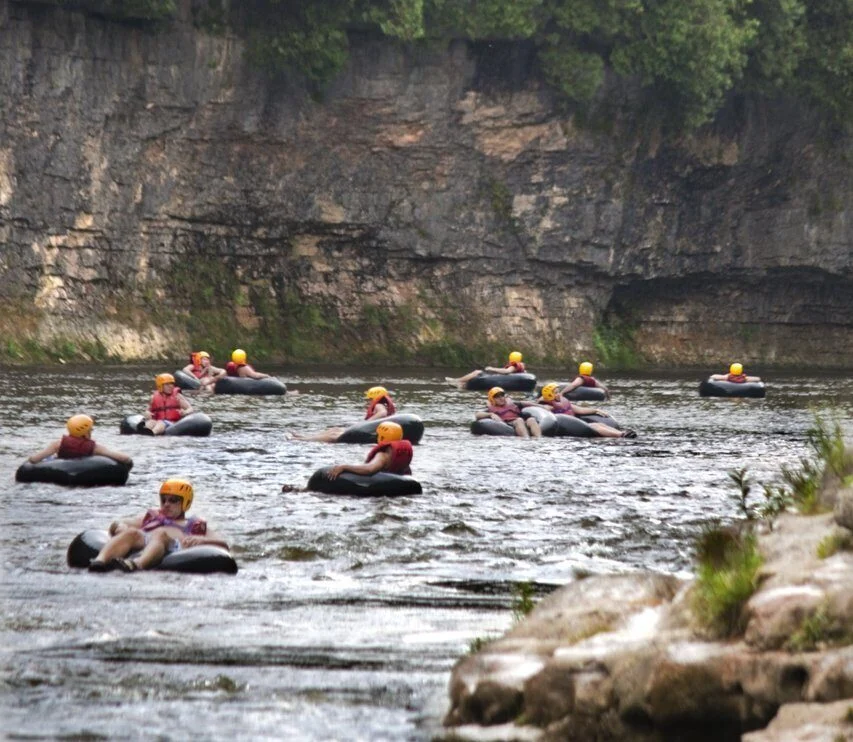
- Elora Gorge, Grand River. Not turquoise, but clear and quick, running between twenty-five metre limestone walls. You go through it on a tube. Ninety minutes from Toronto.
- The Georgian Bay shoreline generally. Same dolostone, same clarity, far fewer people the further you get from the marked attractions.
- Killarney and the North Channel. Quartzite instead of limestone — white rock, hard blue water. Beautiful, and too far for a day trip out of Toronto.
What Ontario does not have is water that is both warm and clear. You get one or the other. Mostly you get the second one.
Why is the water that colour and not the usual lake green?
Three things at once: pale bedrock throwing light back up, very little suspended sediment, and low nutrient levels, which means almost no algae to tint it green.
Most Ontario lakes sit in granite or on soft sediment. Tea-coloured water, dark bottom, that familiar northern green.
The Bruce is different. Dolostone is nearly white, the shoreline is rock rather than mud, and the bay is deep and cold enough to stay clear through the summer.
Change any one of those and the colour goes. Which is why the effect is concentrated along a fairly short stretch of coast rather than spread across the province.
When is the water actually warm enough to swim?
Late July through early September for most people. June is technically possible and honestly quite cold. May is for a specific kind of person.
Georgian Bay warms slowly and unevenly. Shallow coves like Indian Head Cove sit several degrees above the open bay, which is why everybody swims there and nobody swims off the cliffs.
September is the quiet secret. The water holds its summer temperature for weeks after everyone goes back to school, and the light gets better.
October is for looking, not swimming.
Do you need a permit to visit the Grotto?
Yes — Bruce Peninsula National Park requires a park entry permit, and in the busy season the Grotto parking lot runs on timed reservations that sell out well in advance.
This is the part that catches people out. The trail is free to walk once you are inside; getting a vehicle inside is the bottleneck.
If you drive, book the timed parking slot the moment it opens and build the rest of the day around it.
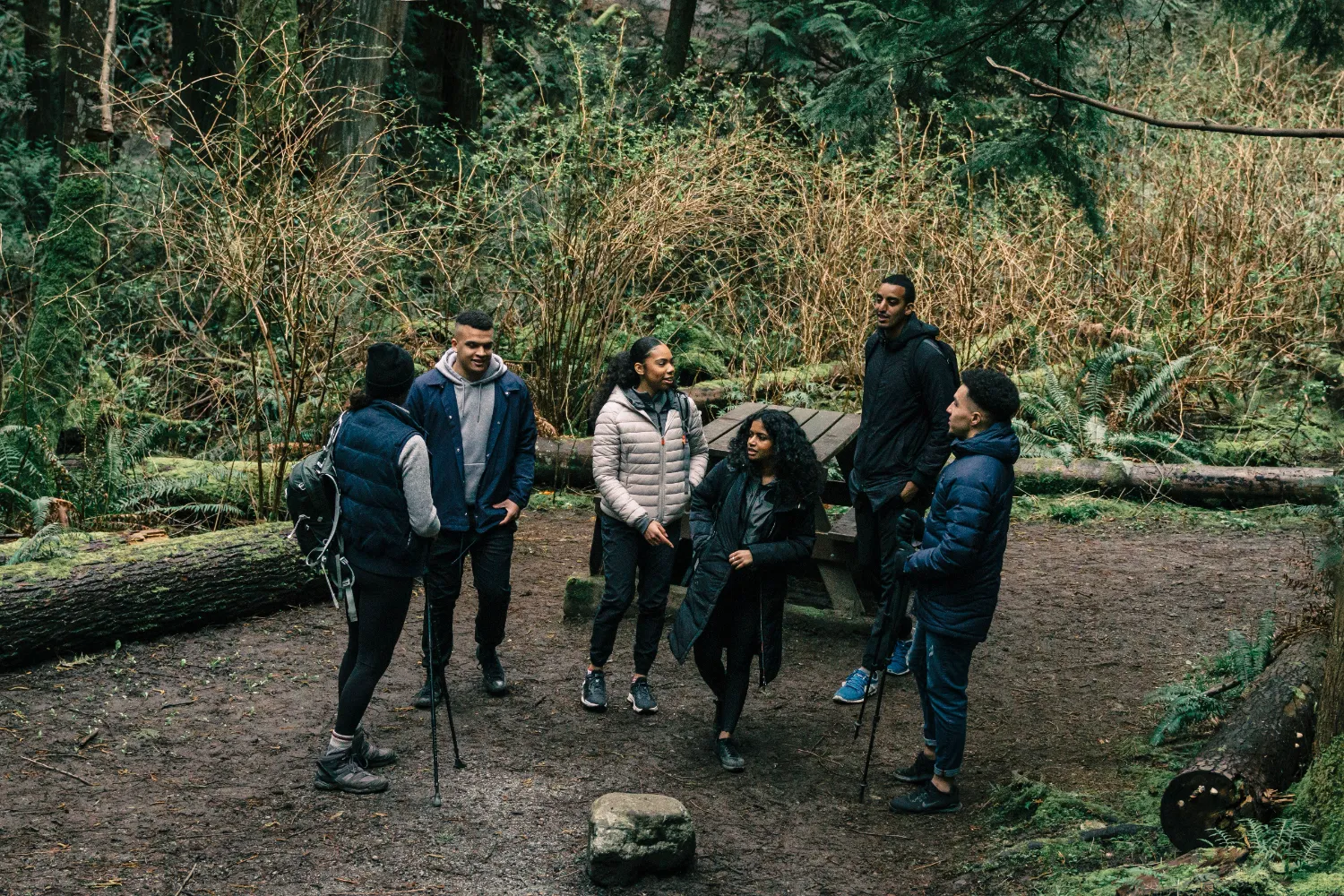
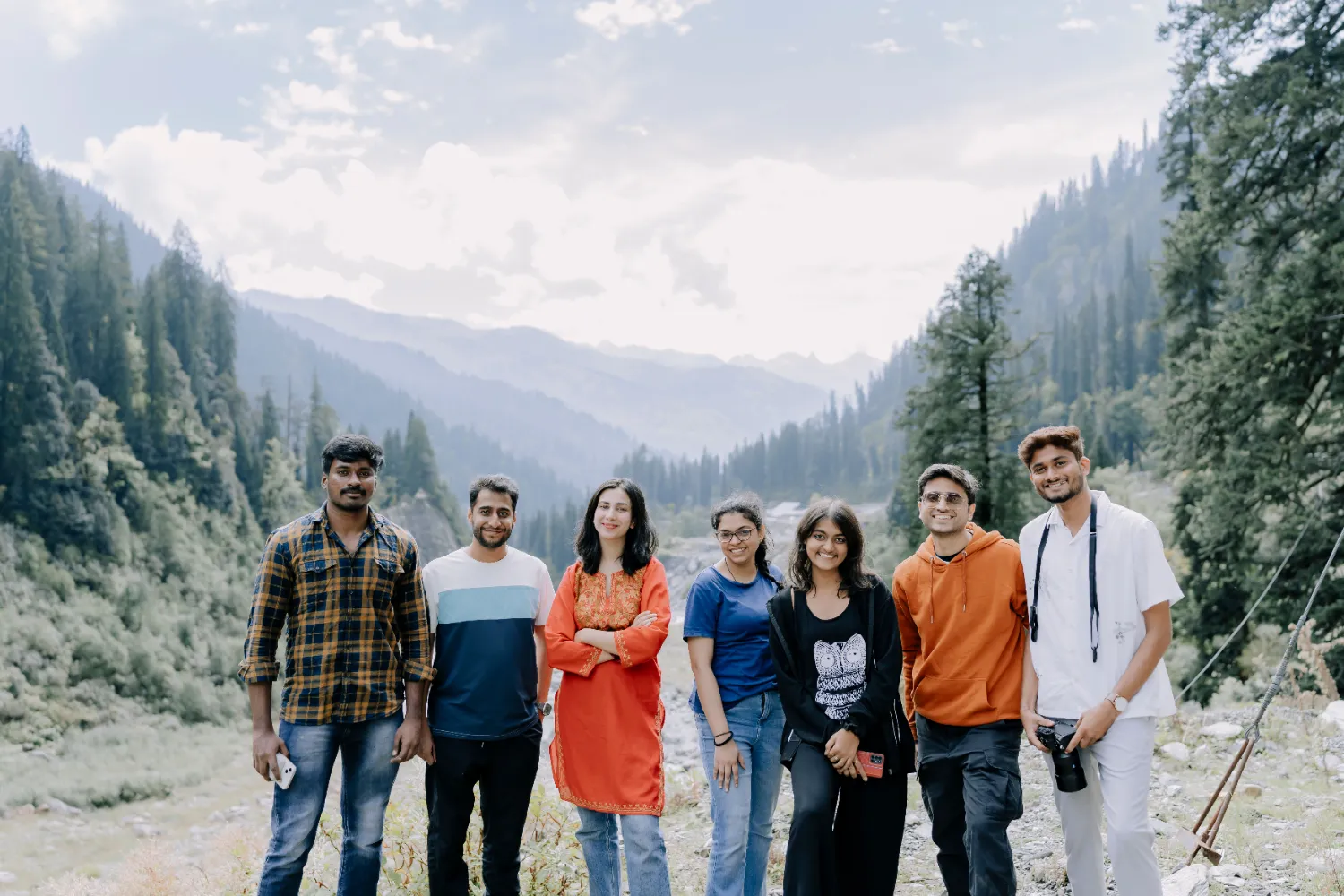
If you come on a group trip the permit is already held before you board, which removes the only genuinely stressful part of visiting.
Either way: go before you talk yourself out of the drive. It is the best four and a half hours of nothing that Ontario has to offer.
Marcus Adeyemi
Spends his own weekends on the Georgian Bay shoreline and has swum the Grotto in three different months, one of which he does not recommend. Covers where the water is worth getting into.